To overview
Technology Press Conference
 
Head mounted displays – lightweight and optically brilliant Downloads and Links


RTF Documents
english (21 KB)

Further Information
Deutsche Version

Technology Press Conference


BAD KREUZNACH, OBERKOCHEN/Germany, 04.06.2004. Modern means of communication such as mobile phones and PCs are becoming increasingly small and compact – to the delight of their users, of course. However, users are not generally so enthusiastic about the reduction in display size to which this trend has inevitably led. The mini-displays simply reach their limits when it comes to visualizing complex image content. Carl Zeiss presented a solution to this problem at its Technology Press Conference 2004: the company’s researchers have developed a Head Mounted Display (HMD) which generates a large, virtual image. With this monitor replacement, the wearer can recognize even small details.

Compared to previous Head Mounted Displays with their inadequate image quality and unacceptable weight, the data display device presented by Carl Zeiss at the Technology Press Conference 2004 is considerably lighter and also meets the demanding requirements of stat-of-the-art applications. “The optical unit of our HMD demonstrator tips the scales at just 40 grams. Thanks to the use of leading-edge technologies, however, its can display an image corresponding to that of a 17 inch monitor at the standard working distance,“ explains Dr. Martin Edelmann, Project Manager for Head Mounted Displays at Carl Zeiss. “The optics are simply outstanding.“

In a head-worn HMD of this type, either camera images or digital data can be imported from a computer to the micro-display. Until now, the displays used were usually LCDs (Liquid Crystal Displays), but these are now being increasingly replaced by organic LEDs (Light Emitting Diodes). The display image is projected onto the eye by a lightweight, high-precision plastic lens offering good image quality. Users receive the impression that the virtual image is floating at a certain distance in front of them.

Many different applications in development
The use of Head Mounted Displays is conceivable, and in some cases is already reality, in many different fields. Technology enthusiasts in the dental profession divert the attention of their HMD-wearing patients away from drills and aspirators towards movies shown on a screen that appears to be floating in mid-air. People interested in archaeology can use the data display devices to visualize computer-generated, long-forgotten or dilapidated towns like Pompeii by means of simulations. Surgeons also benefit from the seemingly futuristic devices: during minimally invasive procedures, the physician can view an endoscopy image via an HMD instead of having to constantly move his or her eyes between the monitor and the surgical field. A further area of application is firefighting. Head mounted displays provide firefighters with an infrared image of smoke-filled rooms, enabling them to better find persons in need of assistance. In areas where safety is of critical importance, the high-tech eyewear offers an added benefit by supplying an exclusive view of the object observed: only the wearer can see the projected images and information.

“The field of industrial service in particular offers major future potential for the serial use of Head Mounted Displays,“ explains Edelmann. if, for example, a mechanic in a garage has to work hands-free, and the system entries are made via voice control. Together with cooperation partners such as Siemens, BMW and EADS, Zeiss is currently working on solutions for the use of HMDs in the automobile, aircraft and machine service areas. Here, work stages or instructions in the form of symbols, texts, graphics or animations are combined in the display with the real situation seen by the mechanic. While the Zeiss HMD is already optimal with regard to its optical quality, i.e. it delivers flicker-free, sharply defined and undistorted images right into the peripheral zones, “our next industrial-grade model will feature a more attractive design and offer enhanced wearing comfort,” says Edelmann. Carl Zeiss research scientists are also working on the individual components of the overall system such as headsets, portable computer and radio units for data transmission to a radio network (WLAN, Bluetooth). Small, portable computers are still not powerful enough to process extensive quantities of data at sufficient speed. The company’s partners are to try out the new Zeiss instrument technology at the beginning of 2005. If the trials are successful, Edelmann reckons that high-volume production could start as early as 2006.


Image download (JPEG, 73 kB)

Markus Wiederspahn
Carl Zeiss SMT AG
Marketing
Phone: +49 7364 20-2194
Fax: +49 7364 20-9206
E-Mail: wiederspahn@smt.zeiss.com

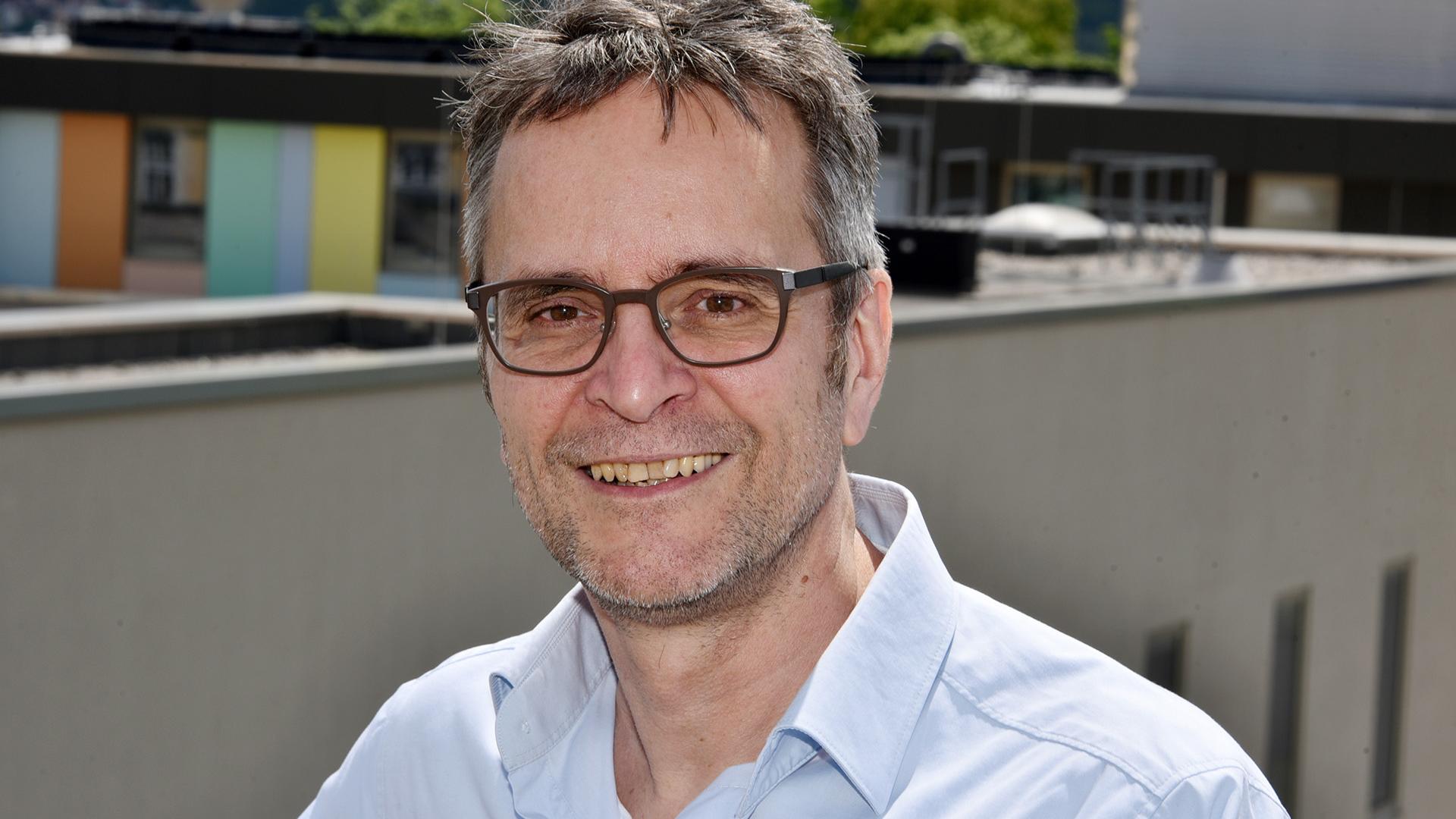
Dr. Martin Edelmann, Carl Zeiss
Corporate Research and Technology
73446 Oberkochen, Germany
Phone +49 7364 20-3406;
Fax +49 7364 20-2375
Email: edelmann@zeiss.de

Number: 068/04 CC

Number of Words: 710
Number of Characters: 4851

Go To Top
To overview